
Corfu Insider Tips: Our 2027 Travel Guide to the Island and Northern Corfu
The Owners' Holiday Guide to Corfu
This is the Corfu travel guide we wish every villa guest had before their holiday. It’s the list our hosts at IonianStone share with friends and family who come to Corfu, now written down for you.
Restaurants we go back to. Beaches we still find quiet in August. Shops worth a detour through the Old Town. The boring but useful stuff too, like where to park, which supermarket opens on Sunday, and who to call for a taxi to the airport.
Every place name in this guide is hyperlinked to Google Maps, so you can save the ones you like straight to your phone before you arrive. We’ve grouped everything by area: the island as a whole, then Corfu Town, then our neighbourhood in the north near Acharavi, and a few practical sections at the end. If you’d rather scan one master list, the full IonianStone map list is here.
Anything we recommend, we recommend on personal experience. No affiliations, no commissions, no kickbacks. If you find a place we should know about, please tell us during your stay.
| Quick facts about Corfu and IonianStone | |
|---|---|
| Best time to visit | May to October. The sweet spots are late May, June, early September and October. |
| Where IonianStone is | Vasilika Peritheia, Northern Corfu. Around 50 minutes from Corfu International Airport (CFU). |
| Capacity | 8 guests per villa. Up to 16 across the full estate (Villa Aether plus Villa Ode). |
| Closest beaches | Almyros (3.2 km), Kalamaki (5.1 km), Avlaki (11.9 km), Kerasia (16.8 km). |
| Language and currency | Greek (English widely spoken in tourist areas). Currency is the Euro. |
1. A few words about Corfu
Landscape
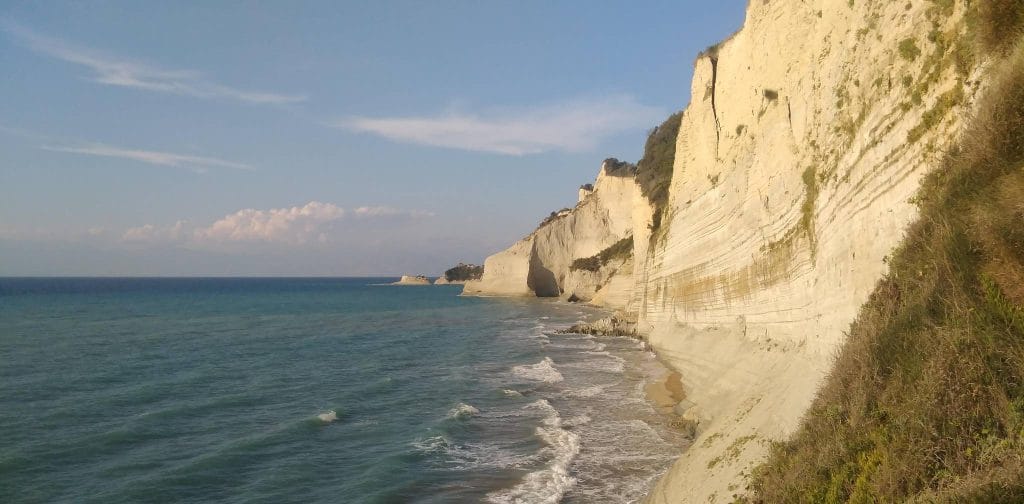
Corfu doesn’t look like the rest of Greece. The light is softer, the colour palette is greener, and the olive groves that cover the island are old, gnarled, and dense enough to keep the interior shaded right through August. Cypresses spike up between them. The seas around the coast shift between aquamarine and a deep emerald you mostly find further north in the Adriatic.
The south is flat and wide. Issos and Halikounas have rolling dunes that back onto the Korission Lagoon, which is a protected wetland and a quiet place to walk at dusk. The west coast is the dramatic one: golden sand at Glyfada and Agios Gordios, sheer cliffs behind, and the sunsets the island is best known for.
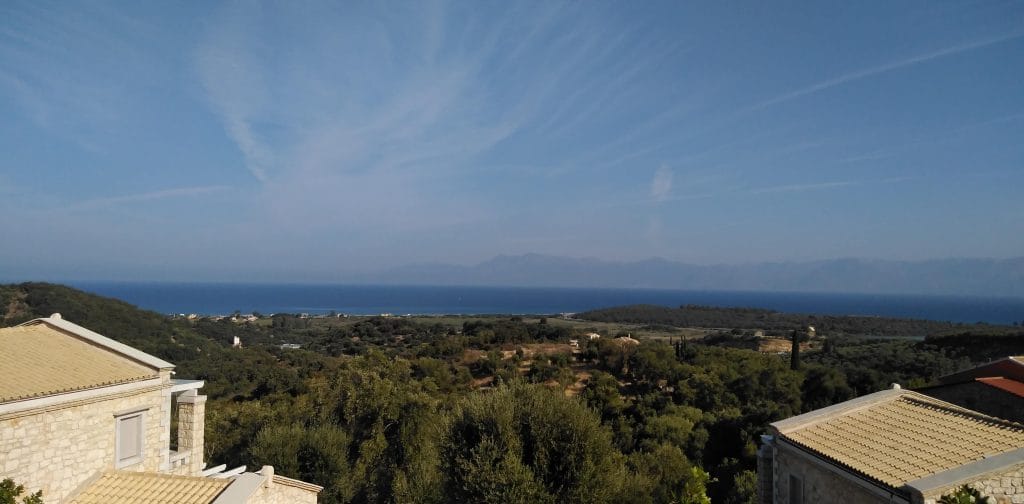
The north, which is where IonianStone sits, is the rugged half of the island. Mount Pantokrator rises out of the middle and pulls weather in from Albania. Long sandy beaches stretch along the top coast at Kalamaki, Almyros, Acharavi and Roda, while the east side is a chain of small pebbly coves around Avlaki, Kalami, Agios Stefanos, Kerasia and Agni, most of them with a fish taverna at the end of the road. Drive west from us and you reach the Loggas sunset cliffs, the twin bays of Porto Timoni after a short hike, and Cape Drastis if you take a boat from Sidari.
Northern Corfu balances privacy with access. You can be on a remote beach in twenty minutes and back at the villa for a long lunch.
History
Corfu has the only history in Greece that doesn’t include four centuries of Ottoman rule. The Venetians held the island for almost 400 years and left their fingerprints on most of what you’ll see in Corfu Town: the Italianate architecture, the narrow kantounia alleyways, the two fortresses guarding the harbour, the elegant restraint of the public squares.
After the Venetians came the French (briefly, but long enough to build the Liston in the style of the Rue de Rivoli), then the British, who added a neoclassical palace, paved roads, and the local enthusiasm for cricket that you can still see on Spianada Square on summer weekends. Greece took the island in 1864.
The Old Town is a UNESCO World Heritage site, and walking it slowly is the best way to feel the layers.
Food and drink
Corfiot food carries a strong Venetian accent. Lots of olive oil, lots of seafood, lots of dishes that wouldn’t look out of place in Puglia. Meals usually start with mezes and a chilled glass of ouzo, or local wine, or a cold beer from one of the small Corfu breweries. Tsitsibira, the local ginger beer, is the non-alcoholic option people ask about.
The dishes you should try at least once: pastitsada (rooster or beef stewed in a tomato and cinnamon sauce, served with thick pasta), sofrito (veal slow-cooked with white wine, garlic and parsley), bourdeto (fish in a spicy red sauce, usually scorpionfish), and tsigarelli (wild greens stewed with hot pepper). The local kumquat, grown almost exclusively in the north, turns up in liqueurs, jams and ice cream.
Most of the good meals you’ll have here are in seaside tavernas where the fish was caught that morning. The atmosphere is half the point.
2. What to see in Corfu Town and across the island
The Old Fortress
Massive Venetian bastions, a sea moat at the entrance, and a long British-built parade ground behind it. Climb to the lighthouse for the best wide view of the Old Town from above. You can also see inside the small Church of Saint George and look across the bay to the mainland.The New Fortress
“New” by Venetian standards: 16th century, built when the threat of Ottoman attack was constant. The stone bastions and the underground galleries are worth the walk. The elevated position gives you the postcard view of the terracotta rooftops if you want a photograph that isn’t from Liston.Spianada Square
One of the largest public squares in Europe, with a cricket pitch in the middle of it. (Yes, cricket. The British left it behind.) It’s the green seam between the narrow Old Town and the seafront, and it’s where locals meet on summer evenings.The Liston
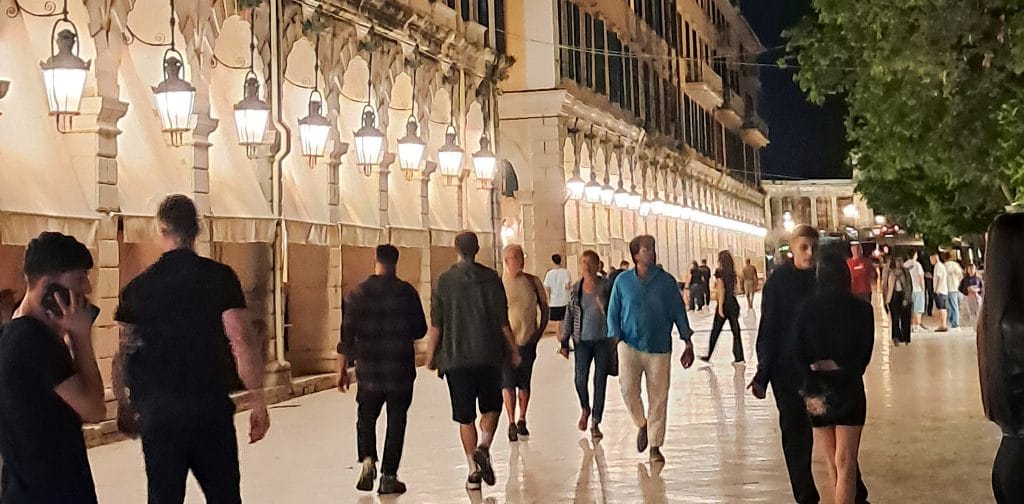
The arcaded promenade that defines the look of Corfu Town. The French built it during their short rule between 1807 and 1814, modelled on the Rue de Rivoli in Paris. The name comes from the Venetian word lista, the list of noble families who were permitted to walk the colonnade. Today it’s open to everyone and lined with cafes.The Old Town Hall (San Giacomo Theatre)
A small Venetian-era building that started as a meeting place for nobles and went on to become the first opera house in Greece. The carved facade is worth a minute, and the small square in front of it is a quiet corner of the centre.Corfu Museum of Asian Art
Set inside the Palace of Saint Michael and Saint George at the north end of Spianada. Over 15,000 pieces from China, Japan, India and the Buddhist world. The collection is unusually deep for a small island museum and worth an hour even if Asian art isn’t your usual thing.Archaeological Museum of Corfu
The headline piece is the Gorgon pediment from the 6th-century BC Temple of Artemis: huge, scary, and almost completely intact. Worth visiting just for that.Byzantine Museum of Antivouniotissa
A 15th-century church now housing post-Byzantine icons, many of them painted by Cretan masters who passed through Corfu on their way to Venice. Small, well lit, and rarely busy.Holy Church of Saint Spyridon
The most important church on the island, with the relics of Corfu’s patron saint inside. The Venetian-style bell tower is the tallest in the Ionian and is visible from most of the Old Town.Holy Metropolitan Church of the Virgin Mary Spilaiotissa
Known locally as the Mitropolis, sitting just above the old port. The interior is decorated with care and houses the relics of Saint Theodora Augusta.Church of Saints Jacob and Christopher
The Catholic cathedral of Corfu, in Town Hall Square. Gothic tower, a 16th-century interior that’s been restored carefully, and almost no crowds.Holy Monastery of Panagia Vlacherna (Kanoni)
A small, whitewashed 17th-century monastery on a tiny islet, joined to the Kanoni headland by a narrow causeway. It’s the photograph you’ve seen of Corfu before you arrived. A short drive from the centre, best at sunset.Achilleion Palace (near Gastouri village)
Built in 1890 for Empress Elisabeth of Austria, who was obsessed with the figure of Achilles. The gardens are full of mythological statuary, and the giant bronze Achilles overlooking the Ionian is the headline. Worth a half-day if you’re heading south.Holy Monastery of the Virgin Mary (Paleokastritsa)
Founded in 1228 and still active. Small museum of Byzantine icons inside, and an old olive oil press in the courtyard. The view from the cliff over the Paleokastritsa bays is the main reason most people make the drive.Angelokastro (northwestern coast)
A 13th-century Byzantine fortress on a sheer cliff. Built to defend the island from pirates, and at one point the regional capital. The walk up is short but steep. The view across the Adriatic is enormous, and there’s a tiny chapel inside a cave in the rock.Canal d’Amour (Sidari)
A geological oddity: sandstone channels carved by the sea into narrow swimmable corridors. Honest note: it gets crowded in July and August, and the area around it is heavily touristed. Worth a look if you’re already in Sidari, not really worth a special trip.Mount Pantokrator (Northern Corfu)
The highest point on the island, with a 17th-century monastery at the top built over the ruins of a much older one. On a clear day you can see the Albanian mountains, the Greek mainland, and the coast of Italy. Drive up early or late to avoid the midday heat haze.3. Corfu Town: where to eat, drink and shop
What follows is a curated list of well-known spots and a few quieter places we go back to. It’s growing as we discover new places ourselves. Tell us your finds.
Parking. Don’t drive into the centre. The streets are narrow and one-way, and you’ll spend longer parking than walking. Leave the car in one of the two designated lots about ten minutes’ walk from the centre: Parking 1 or Parking 2.
When to arrive. Come early. Around 9:00 the town is waking up and the light on the stone is good. By mid-morning the cruise day-trippers arrive on the main streets. The small alleys parallel to the main routes stay quiet all day.
Getting “lost” is fine. The Old Town is small and the sea is on three sides, so you can’t really go wrong. Take the side streets.
Heat. Corfu summer is humid as well as hot. Drink water, take breaks. A shaded bench on Spianada, a coffee at Liston or an ice cream from Papagiorgis is part of the rhythm.
Opening hours. Check before you go for any specific site or shop. Many small businesses close for a long lunch, some close on Mondays, and museum hours change with the season.
Reservations. In July and August, call ahead or book online for any restaurant you actually care about. Walk-ins are hit and miss after 8pm.
Disclaimer. These are personal recommendations. We have no business affiliations with any of the places listed and can’t guarantee your specific experience.
Where to eat in Corfu Town and around the island
Psaraki
A modern take on Greek seafood cooking, overlooking Spianada. Good list of small plates and a kitchen that takes presentation seriously.
Corfu Sailing Club
Inside the Old Fortress, with sea on both sides. Strong on fish and on Mediterranean classics. Book a sunset table.
Aegli
A Liston veteran with over 40 years on the colonnade. Greek and international menu. The location is the main draw, but the food is consistent.
Rex
Open since 1932, just behind Liston. Classic Greek cooking done properly. The kind of place where the waiters know the menu by heart.
Porta Remounta – Barbas
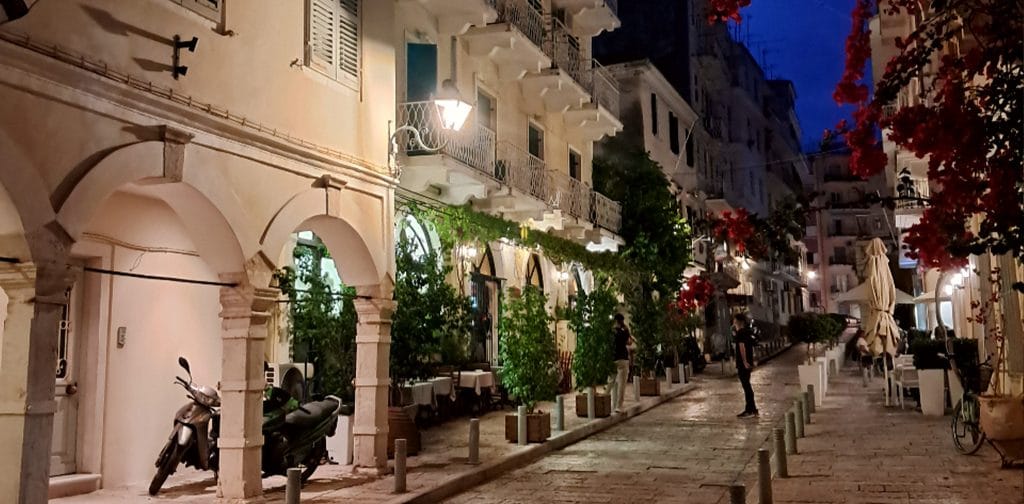
A small Corfiot restaurant on a bougainvillea-shaded walkway in the Porta Remounta quarter. Traditional family recipes, local ingredients, and one of the prettier outdoor settings in the Old Town.
Ampakas
Off the tourist track in the Ovriaki neighbourhood, a quieter pocket of the Old Town. Authentic Greek dishes, low-key atmosphere, and a kitchen that doesn’t try to be anything it isn’t.
To Tavernaki tis Marinas
Also in Ovriaki, in the Spilia alleyways. Family-run, with a homemade feel and Corfiot dishes you won’t see on every menu in town.
Ninos
A local favourite for traditional cooked dishes and grilled meats. Good for a sit-down lunch or a takeaway you can eat on the seafront.
Silo
An all-day Greek bistro with a more modern kitchen, set in front of an old Venetian granary in the Spilia area. Good for a long brunch or a relaxed dinner.
Saluteria
An Italian-leaning wine bar and bottega. Charcuterie, Greek and Italian cheeses, and a wine list that goes well past the predictable. Good for a long, slow lunch.
La Famiglia
A small Italian trattoria hidden in the Campiello alleys. Cosy, casual, and reliably good.
Del Sole
Italian, in a quiet alley off Porta Remounta. Pasta done properly and a short, focused menu.
Pomo d’Oro
Higher-end, in Skaramangas Square. Corfiot dishes reworked with modern technique and presentation. Book ahead in season.
The Venetian Well
In Kremasti Square, around a 17th-century wellhead. Contemporary fine dining in one of the most atmospheric corners of the Old Town. A special-occasion place.
Klimataria (Benitses)
Seventeen tables, family-run, on the water in Benitses south of town. The Bellos family have been doing this for years and they do it well. Fish-forward, traditional, and personal.
Olympia Mare (Gouvia)
Greek and international cooking with a view over the yachts in Gouvia Marina. A good stop if you’re sailing or based on the east coast.
Etrousco (Kato Korakiana)
Ettore Botrini’s restaurant in a stone courtyard in a quiet inland village. Inventive, Michelin-starred Greek-Italian cooking. The destination dinner on the island.
Toula’s seaside (Agni)
Right on the beach in Agni Bay, with multiple awards behind it and a kitchen built around top-end local seafood. Worth the drive from anywhere on the island.
Where to drink in Corfu Town and around the island
Liston and Kohlias
Any of the cafes along the Liston colonnade work for a slow coffee or an aperitif. Liston (the cafe of the same name) and Kohlias are two of the reliable ones. Sit under the arches or out under the trees, and you have a front-row view of the cricket pitch and the daily life of Spianada.
Mikro Cafe
Inside the Old Town, with a green courtyard you wouldn’t guess was there. A nice escape from the main streets without leaving the centre.
Bristol Cafe Bar
Near Spianada, with a view over the San Giacomo Old Town Hall. Works equally well for a morning coffee and a late cocktail.
Corfu Old Fortress Cafe
Coffee, drinks and snacks with a direct view of the Old Fortress and Garitsa Bay. Sit-down spot for an afternoon break.
Stazei Meli
Near Town Hall Square. Famous for loukoumades, the Greek honey doughnuts. Stop here if you have a sweet tooth and an afternoon to spend wandering.
Cale Larga
A small cafe-bar on a quiet backstreet. Baroque music, candles, and the kind of atmosphere people overuse the word “old-world” to describe. We’ll just say it feels like a different century in a good way.
Cafetierra
A tiny specialty espresso bar near Spianada for people who take their coffee seriously. A handful of tables. The brews are the best in town.
Cafetierra Plakado
The sister of the original, in the historic Plakado district. Same approach to coffee, slightly different alley.
Akron Beach Bar (Paleokastritsa)
An elegant beach bar and restaurant on the Alypa Marina side of Paleokastritsa. Sea views, lounge atmosphere, and live jazz some evenings in summer.
La Grotta (Paleokastritsa)
142 steps down from the road. A cliffside lagoon, a small bar, and one of the more memorable places to spend a slow afternoon on the island.
7th Heaven (Peroulades)
At the top of Logas beach in the northwest, this is the sunset bar on Corfu. The view is what people come for. The drinks are fine.
Where to shop in Corfu Town
A small selection of local shops where the atmosphere is the point as much as the products.
Local morning market
Under the walls of the New Fortress, this open-air market is where the town buys its fish, vegetables and herbs. Worth a walk through even if you’re not cooking. Earlier is better.
Periklis Alexis dairy shop
Family-run since the 1930s, in the Pinia neighbourhood. Fresh artisanal butter, syrupy galaktoboureko, rice pudding and homemade vanilla and chocolate custard creams. A few tables if you want to sit and eat there.
Patounis soap shop
Operating since 1850, run by the fifth generation of the same family. UNESCO-recognised traditional soap-making, hand-stamped, near San Rocco Square. The soap is heavy and lasts forever, and it makes a good gift for anyone who likes thoughtful things.
Thessalonikios bakery
The morning stop near San Rocco. Handmade pies from Northern Greece, especially the bougatsa (custard or cheese filled). Get there before 10am for the best selection.
Plous bookshop
An independent bookshop and quiet cultural space in the Old Town. The hidden courtyard at the back is a good place to read whatever you’ve just bought.
Papagiorgis gelateria
A century old, family-run, near Liston. Artisanal gelato plus traditional Corfiot sweets like kumquat glaces and mandolato. The line moves quickly.
Voulismas pastry shop
Since 1936. Old-school Corfiot recipes, mostly unchanged. The kind of pastry shop where the case looks the same as it would have in 1980, and that’s the point.
Markosian coffees
A coffee roastery operating since 1908. You’ll smell it before you see it. Beyond the coffee, they sell candies, butter toffees, and dried fruits that make small edible souvenirs.
Lavranos DeliMeat
Corfiot charcuterie, including the local noumboulo, plus cheeses, honeys and good wine. The right stop if you’re putting together a serious gift basket or a picnic for a boat day.
Dionysios Skiadopoulos Pharmacy
The keeper of Spetsieriko, the secret Corfiot spice mix used in dishes like pastitsada. Production is small and demand is high, so they often limit you to two packets when it’s in stock.
Salty Bag
An ethical brand making bags and accessories from upcycled sailcloth. Each piece carries the story of the boat its sail came from. Stylish, durable, and a souvenir you’ll actually use.
Myrto Zirini Ceramics
A small studio in the Mouragia area making one-off ceramic pieces with organic shapes and Mediterranean colours.
Laini ceramics
Handcrafted, more colourful and functional, easier to pack. Good for plates and cups you’ll use back home.
Curiudo jewelry
A concept store on Gilford Street with jewellery, accessories and home objects with a clean Mediterranean aesthetic.
Anti-kairoi gift shop
In Town Hall Square. A small curated mix of scarves, clothes, accessories and handmade jewellery. Useful for last-minute gifts.
Ex Oriente Lux
On Sevastianou Street. Clothing and jewellery with an Oriental influence: rich fabrics, intricate patterns, handcrafted pieces.
Petretin boutique
Higher-end clothing from niche brands and Greek designers, plus the shop’s own line built around sustainable local materials.
4. Near IonianStone
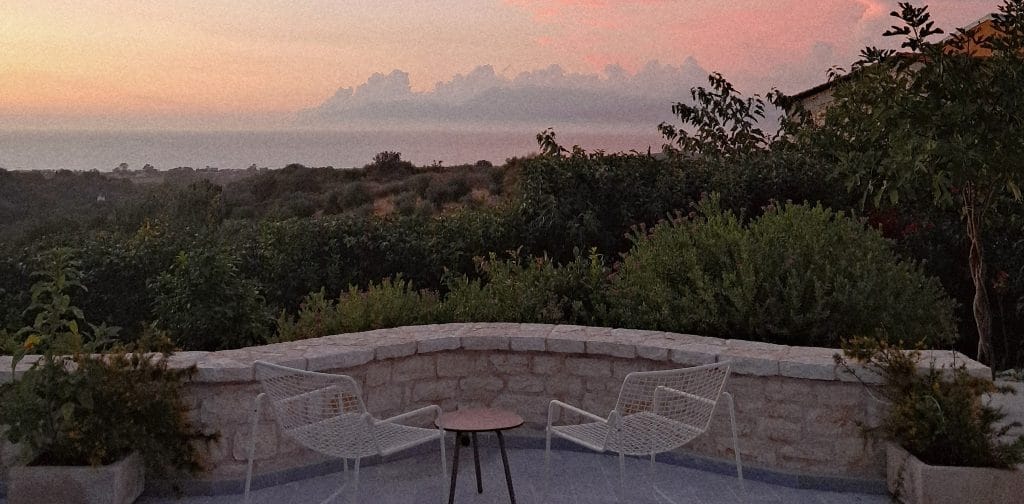
This section covers our immediate neighbourhood: Acharavi, Roda, Almyros, Old Perithia, Kassiopi, Avlaki, Agios Stefanos. Most of it is within a 20-minute drive of the villa.
Where to shop for essentials
Acharavi is about a five-minute drive from us. It’s a small village but can get crowded in summer; parking around the centre is tight.
Masoutis supermarket (Acharavi)
The all-rounder. Family-friendly, reasonable prices, decent range. The basement has a section worth a look.
Kazianis supermarket (Acharavi)
Pitched at professional buyers, so it’s the right stop if you’re cooking for a big group or want bulk packaging.
Diellas supermarket (Acharavi)
Budget-friendly and unusually well stocked with Italian imports.
Bucher’s shop (Acharavi)
The reliable local butcher. Fresh meat, friendly service.
Sunday and holiday mini-market (Agios Ilias)
The big supermarkets all close on Sundays and public holidays. This is the fallback for basics: bread, milk, eggs, things you forgot.
Where to eat and drink near us
Acharavi, Roda and Almyros are good for casual, fairly priced food. For something more refined, drive a little further east to Kassiopi, Avlaki, Agios Stefanos, Kalami, or up the mountain to Old Perithia.
See You Coffees (Acharavi)
Good coffee, decent breakfast and snacks. Works for a sit-down or a takeaway.
Kontesa bar (Acharavi)
On the main road. A more polished bar than you’d expect in the village, good for an aperitif or a late drink.
Angelos Pizza and Crepes (Acharavi)
Simple but excellent. Tip: call ahead to order so you’re not waiting.
Kalamaki Grill (Roda)
Pita, souvlaki, grilled meats. Reasonable prices, a pleasant courtyard, takeaway available.
Prasinos since 1958 (Acharavi)
An institution on the main road. Gyros, souvlaki, grilled specialties, takeaway works.
Filaraki (Acharavi)
Another well-priced local on the main road. Classic Greek pita and grilled dishes. Takeaway available.
Taverna George (Almyros)
Family-run, on the beach. Warm hospitality and traditional Greek cooking. Not fancy. Reliably good.
Petra Beach Bar (Almyros)
A relaxed seaside cafe-restaurant. The food is genuinely good, and they offer complimentary sunbeds to customers.
Maistro (Acharavi)
On the beachfront. Classic Greek menu and consistently good reviews.
Taverna The Old Perithia (Kassaris Alkinoos)
Operating since 1863 in the square of the “ghost village” of Old Perithia. Family-owned, traditional cooking, mountain views. Worth the drive up Pantokrator.
Katoi Bistrot Wine Bar (Kassiopi)
In Kassiopi harbour. Refined wine list, good cocktails, small plates done well.
Cavo Barbaro (Avlaki)
A cool, shaded space either by the sea or under a huge plane tree. The menu sticks to Greek tradition and does it well.
Eucalyptus (Agios Stefanos Sinion)
Upscale, with eucalyptus shade and a harbour view. Polished rustic Greek cooking.
The White House Restaurant (Kalami)
The 1930s home of the writer Lawrence Durrell, now partly a restaurant. Mediterranean seafood, history attached. The setting is half the meal.
Villages near us worth a visit
Kassiopi (9.6 km)
A fishing village that’s grown into the most lively spot on the northeast coast. Good for evening strolls, harbour-front dinners and small swimming coves. The Roman-era castle ruins above the harbour are worth a look, as is the Church of Panagia Kassopitra, which holds a miracle-working icon locals still bring offerings to.
Agios Stefanos (15 km)
The quieter, more upscale neighbour of Kassiopi. A small, picturesque harbour, a handful of refined tavernas right at the water, and not much else. That’s the appeal.
Old Perithia (11.4 km)
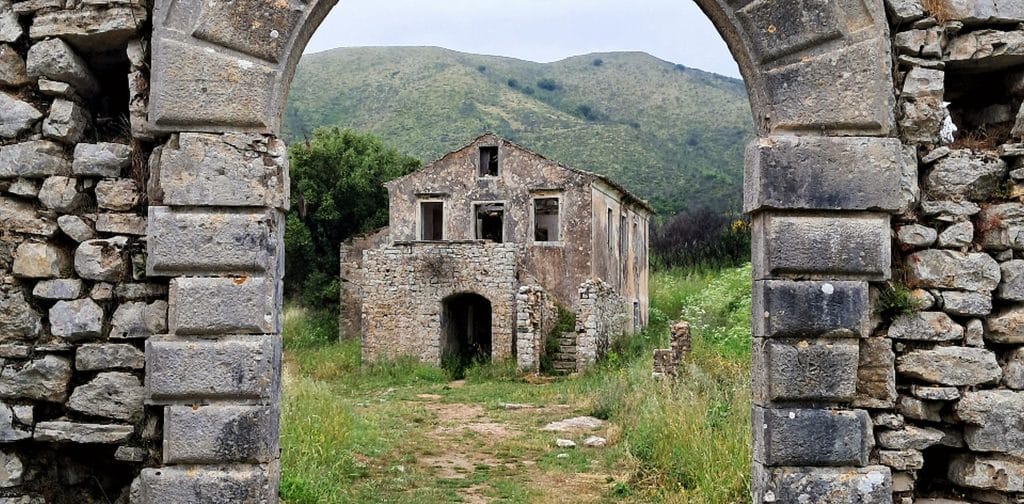
The oldest permanent settlement on Corfu, founded in the 14th century as a refuge from pirate raids and malaria. It’s now a protected heritage site, often called the “ghost village”. 130 hand-built stone houses, eight churches, all on the slopes of Pantokrator. A few tavernas serve old Corfiot recipes for the small crowd that walks up here. Bring decent shoes; the paths are uneven.
Beaches within easy reach of IonianStone
Almyros (3.2 km)
A long, calm sandy beach with tavernas along it. For the best swimming, head for the stretch in front of Petra Beach Bar; other sections can be rocky underfoot. Check the shoreline when you arrive, since the sand levels shift through the season.
Kalamaki (5.1 km)
Clean, sandy, with sunbeds and two tavernas. Sheltered, so it works on windier days when the bigger beaches get choppy.
Avlaki (11.9 km)
A quiet, pristine pebble beach with two relaxed waterfront restaurants. One of our favourites for an afternoon swim.
Kerasia (16.8 km)
Secluded, pebbly, clear water, one good fish taverna at the back. The kind of beach you settle into for a whole day.
Loggas (19.4 km, west coast)
The famous sunset cliffs. There’s natural clay in the rocks that locals mix with seawater for a DIY exfoliation, and a beach bar at the top of the cliff. The water gets rough when it’s windy, which is often, so check conditions.
5. Ideas for activities
Taxis and private transfers
For airport runs and longer trips, contact one of these drivers on WhatsApp ahead of time. Flat rates are usually available, especially for the airport. Always confirm the price before you get in the car.
- Private transfers and minibus: Filippos (ask us for the WhatsApp link during your stay).
- Taxi services: Miltos and Marios, +30 6997775788.
- Private transfers and minibus: Thanasis and Marinos (ask us for the WhatsApp link during your stay).
Holiday experiences
For adventure or for relaxation, the island has a deep list. A few starting points:
Renting a boat for a day opens up the parts of the coastline that roads can’t reach. Two coasts to know:
Northwest coast:
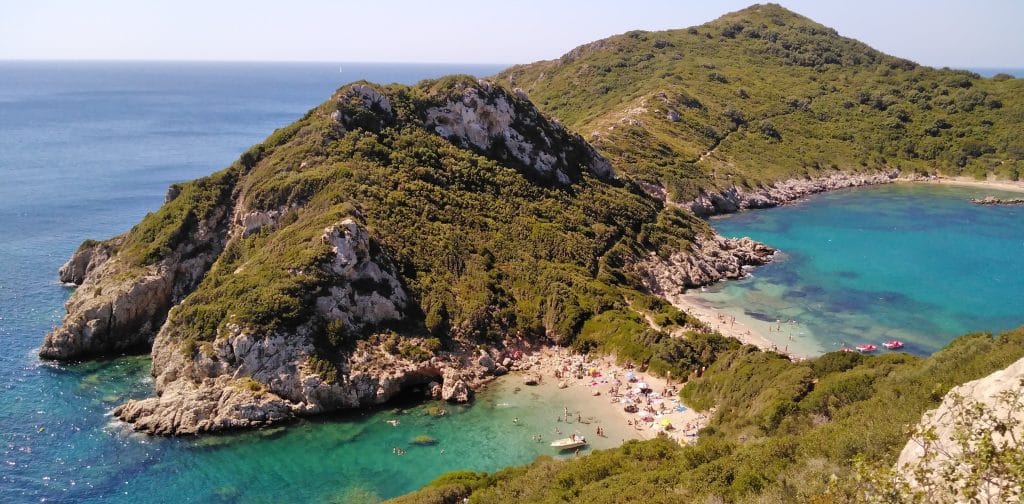
- Porto Timoni. The famous double beach near Afionas, two coves separated by a thin strip of land. You can hike down, but the boat approach is easier and prettier.
- Stelari Beach. Near Paleokastritsa. Sheer cliffs, clean water, no road access.
- Chomi Beach. Sometimes called the Caribbean of Corfu for the turquoise water and white pebbles. Cliffs and pines surround it. Boat only.
- Rovinia Beach. Near Liapades. There’s a steep hiking option, but a boat is the sensible way in, and you can swim into the sea caves nearby.
- Cape Drastis. Wild rock formations sculpted by the sea. Boat only, and a great place for a sunset swim if conditions allow.
Northeast coast:
- Erimitis Ecosystem. A protected coastline with several small beaches like Vromolimni, Akoli and Arias, all boat-only.
- The coast between Kerasia and Agni. Lots of small untouched coves for a quiet swim or a picnic.
Waterside tavernas to moor at:
- Agni Bay is a favourite for boaters and has several jetty-side tavernas.
- Taverna Agni: traditional Greek cooking in a beautiful seaside setting.
- Nikolas Traditional Taverna: also in Agni Bay, fresh home-cooked Corfiot food.
- Taverna Kerasia: on the white shingle beach of Kerasia, with a view across the strait to the mainland.
- The White House (Kalami): the Durrell house, with a jetty and a lovely lunch menu.
Renting a boat for a day opens up the parts of the coastline that roads can’t reach. Two coasts to know:
Northwest coast:
- Porto Timoni. The famous double beach near Afionas, two coves separated by a thin strip of land. You can hike down, but the boat approach is easier and prettier.
- Stelari Beach. Near Paleokastritsa. Sheer cliffs, clean water, no road access.
- Chomi Beach. Sometimes called the Caribbean of Corfu for the turquoise water and white pebbles. Cliffs and pines surround it. Boat only.
- Rovinia Beach. Near Liapades. There’s a steep hiking option, but a boat is the sensible way in, and you can swim into the sea caves nearby.
- Cape Drastis. Wild rock formations sculpted by the sea. Boat only, and a great place for a sunset swim if conditions allow.
Northeast coast:
- Erimitis Ecosystem. A protected coastline with several small beaches like Vromolimni, Akoli and Arias, all boat-only.
- The coast between Kerasia and Agni. Lots of small untouched coves for a quiet swim or a picnic.
Waterside tavernas to moor at:
- Agni Bay is a favourite for boaters and has several jetty-side tavernas.
- Taverna Agni: traditional Greek cooking in a beautiful seaside setting.
- Nikolas Traditional Taverna: also in Agni Bay, fresh home-cooked Corfiot food.
- Taverna Kerasia: on the white shingle beach of Kerasia, with a view across the strait to the mainland.
- The White House (Kalami): the Durrell house, with a jetty and a lovely lunch menu.
6. FAQ about visiting Corfu and Northern Corfu
The questions we get most often from guests, with the answers we’d give a friend.
Is Corfu good for a holiday?
If you want green, quiet, and not packed like the Cyclades, yes. Corfu gets winter rain so the olive groves and the landscape stay alive year-round. Northern Corfu in particular has the calmer pace, the better beaches for families, and most of the food worth flying for. The best dates (late June, early September) tend to book out months ahead, so plan early.
What is the best area to stay in Corfu?
It depends on what you want. Corfu Town and the southeast (Benitses, Moraitika) are easier for nightlife and shorter taxi rides. The northeast around Kassiopi, Agios Stefanos and Avlaki is quieter, with the prettiest coves and the best tavernas. The northwest (Paleokastritsa, Liapades) has the dramatic cliffs and the postcard beaches. We’re biased toward Northern Corfu because that’s where we live, but if you want one base that gives you everything in a 30-minute drive, the north wins.
How many days do you need in Corfu?
Five nights is the minimum to feel the island. Seven is the sweet spot. Ten and you can add a day trip to Albania (Saranda, Butrint) or Paxos by ferry without it feeling rushed. Most guests who come for four nights tell us they wished they had stayed longer. Almost nobody comes for ten and complains.
When is the best time to visit Corfu?
Late May, June, early September and October are the sweet spots. Sea is warm, sun is generous, but the crowds, prices and humidity haven’t peaked. July and August are hotter, busier and pricier; if you must come then, book restaurants and boat rentals well ahead. Easter on Corfu is a spectacular cultural experience if you don’t mind cooler sea temperatures.
How do I get from Corfu airport to Northern Corfu?
Corfu International Airport (CFU) is about 50 minutes by car from IonianStone in Vasilika Peritheia. The easiest options are a pre-booked private transfer (we can arrange one for you), a taxi from the airport rank, or a rental car if you want flexibility for day trips. Public buses to the north exist but take much longer and don’t run late.
What language is spoken on Corfu?
Greek is the official language. English is widely spoken in restaurants, hotels, tavernas and shops across the island, especially in tourist areas and Corfu Town. Italian and German are common too. Learning a few words of Greek (“kalimera” for good morning, “efharisto” for thank you) is appreciated everywhere.
What food is Corfu known for?
Corfiot cuisine carries a strong Venetian influence. Local specialties to try: pastitsada (rooster or beef stewed with cinnamon and thick pasta), sofrito (veal in a white wine and garlic sauce), bourdeto (spicy fish stew), and tsigarelli (wild greens with hot pepper). The local kumquat appears in liqueurs and ice cream. Most of the best meals are in family-run seaside tavernas.
What is the best beach near IonianStone?
It depends what you want. For long sandy stretches and calm water, Kalamaki and Almyros. For quiet pebbly coves and clear water, Avlaki and Kerasia on the east coast. For drama and sunset, Loggas cliffs on the west coast (a 30-minute drive). For complete privacy, rent a small boat from Agios Stefanos or Kassiopi and find a cove no road reaches.
Is Northern Corfu good for families?
Yes. The northern coast has long, shallow, sandy beaches like Kalamaki and Almyros that work for small children. The villa pools, the slower pace and the short distances make it easy. Many tavernas welcome children and stay open late. There’s enough variety (boat trips, mountain villages, beaches, Old Town) to keep teenagers interested.
What is Corfu famous for?
Corfu is best known for its UNESCO-listed Old Town (the only major Greek town never conquered by the Ottomans), its dramatic landscape of olive groves and Mount Pantokrator, its mix of Venetian, French and British architectural heritage, and its quieter, greener feel compared to the Cycladic islands. The Durrell family lived here in the 1930s and the island still has a literary association with their books.
7. Further reading
To go deeper on Corfu’s culture, food and quieter corners, here’s a short list of pieces from National Geographic, Travel.gr, Lonely Planet and CN Traveller.
The island and its quieter beaches:
- Alternative Corfu: deserted beaches and wild backroads (National Geographic)
- 5 beaches in Corfu to avoid the crowds (Travel.gr)
- Guide to Corfu (Lonely Planet)
Outdoor experiences:
Culture and Old Town:
- Corfu Town guide (Travel.gr)
- Culture Corfu guide (Travel.gr)
- Museums of Corfu Town (Travel.gr)
- Points of interest in Corfu (Lonely Planet)
- Exploring the Jewish Quarter in Corfu’s Old Town (Travel.gr)
Food and drink:
If you have any questions during your stay, or you’d like us to book a taxi, a boat or a table somewhere, we’re a phone call away. Have a wonderful time on the island.
The IonianStone team